
$5.75
$7.19
50% OFF! Hot items selling fast—Grab them before they're gone!
 Unconditional Satisfaction GuaranteeNo Shipping Fees Above 302 Months to Decide. Returns Simplified.
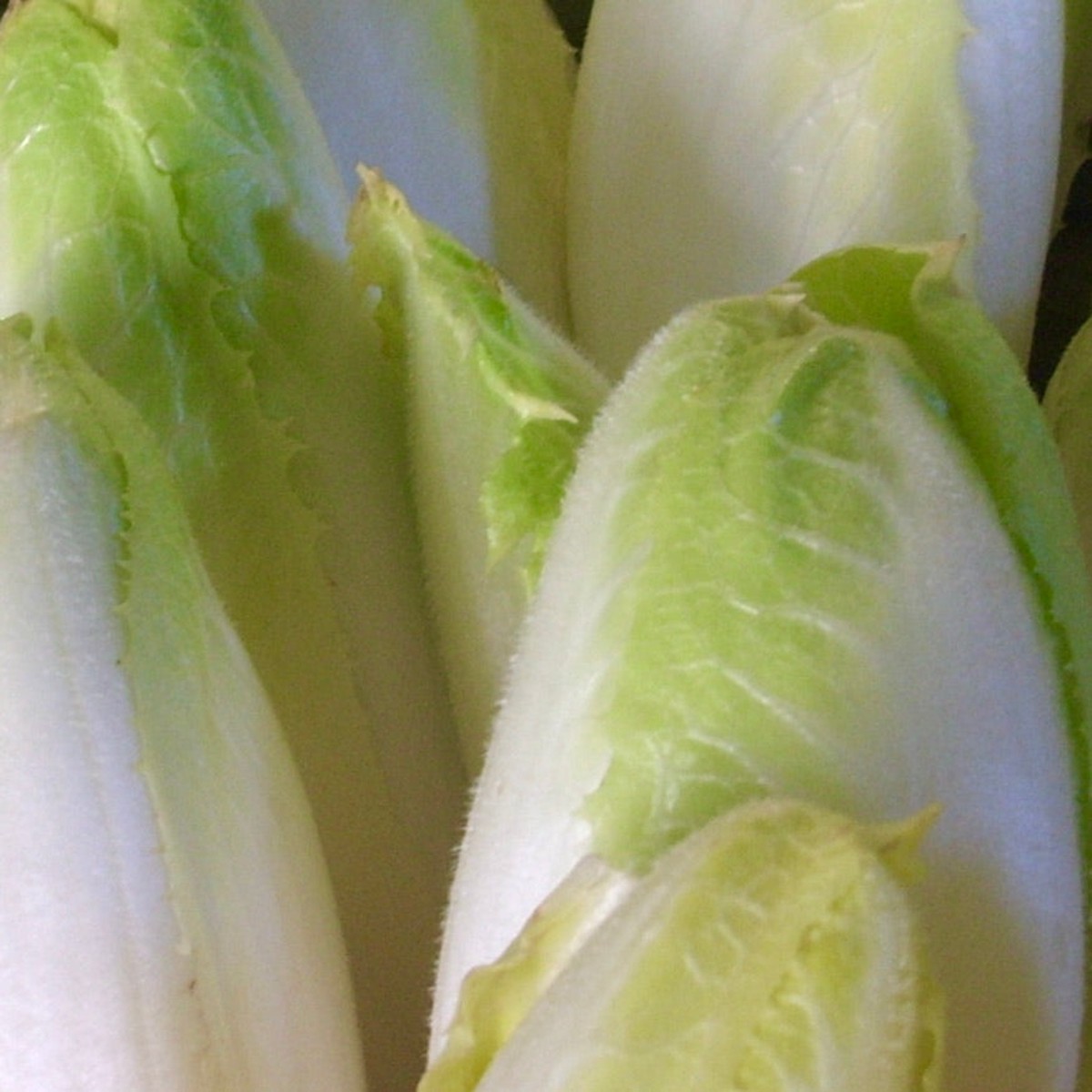
Cichorium intybus var. foliosum ‘Brussels Chicory’ seeds grow into Belgian endive (witloof chicory) the widely cultivated forced chicory of Belgian origin, producing tight, pale, elongated chicons (blanched buds) of delicate bitter flavour by a two-stage cultivation process (outdoor root development, then indoor forcing in darkness). Cichorium intybus L. is the common chicory a perennial of the temperate biome native to Europe, temperate Asia and North Africa, described by Linnaeus (1753). The epithet intybus is a pre-Linnaean Latin name for chicory. Var. foliosum is the leaf chicory group. Belgian endive (witloof = ‘white leaf’ in Dutch) was developed in Belgium in the 19th century through accidental discovery of forced blanching; now a major European salad crop. Uses: food, medicine (inulin-rich roots used as prebiotic). Family Asteraceae.
Full sun (first stage, outdoor); complete darkness required for forcing stage (induces pale, compact chicons). Two-stage cultivation: grow roots in full sun until autumn, then lift roots and force in a dark, warm space. Forced chicons are harvested cut at the base.
Cichorium intybus var. foliosum ‘Brussels Chicory’ Belgian endive is one of the great accidents of agricultural history: a Belgian gardener’s chance discovery in the 1830s that chicory roots, left in dark storage, produced pale, compact, bitter-sweet buds that would become one of Europe’s most prized winter salad crops and a cornerstone of the Belgian culinary identity.
IMPORTANT: Pictures show the adult plant, which is not for sale. The offer is only for seeds.